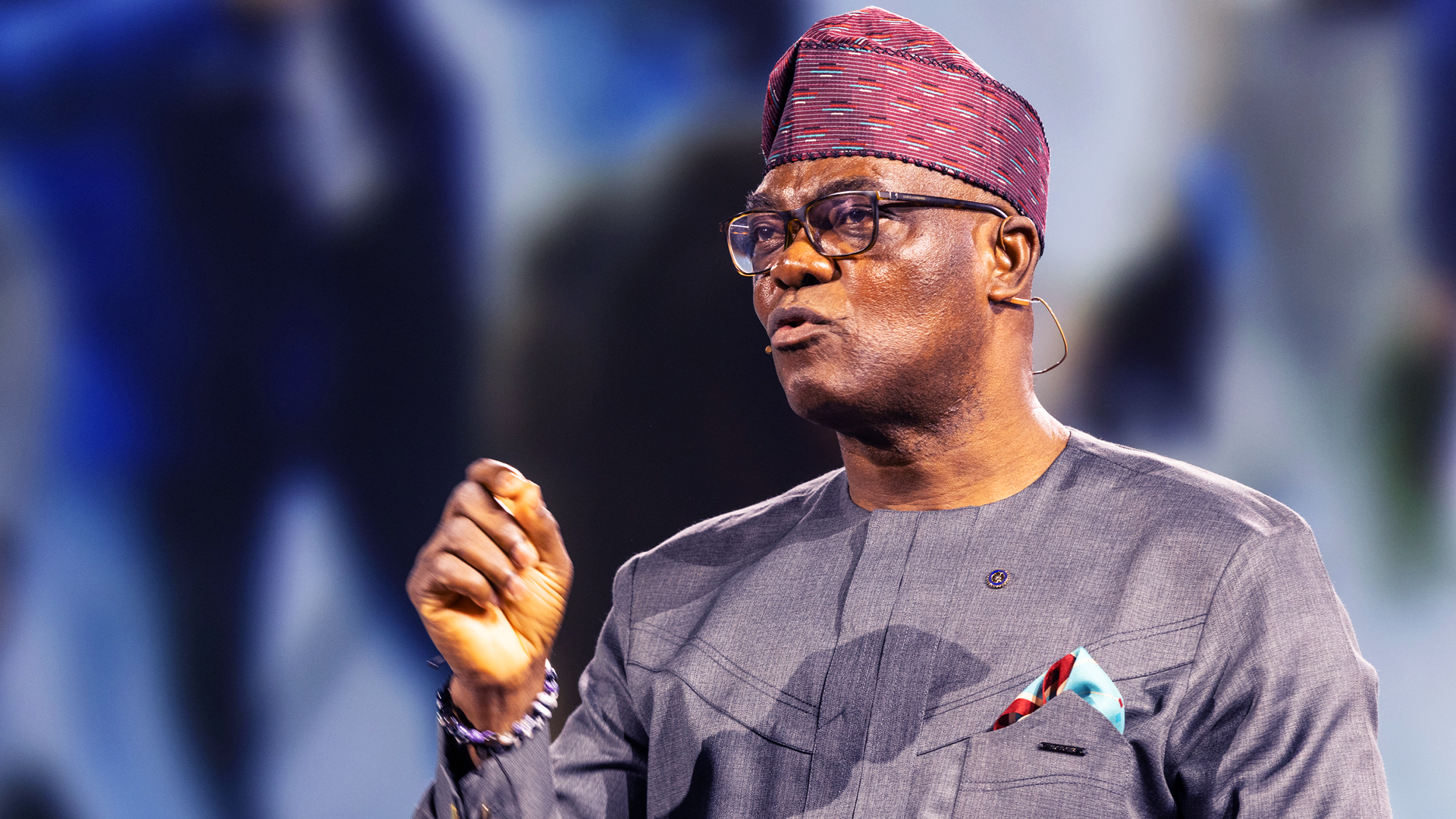
Meet the RI President:
Olayinka Hakeem Babalola
Rotary International President,
RY 2026-2027

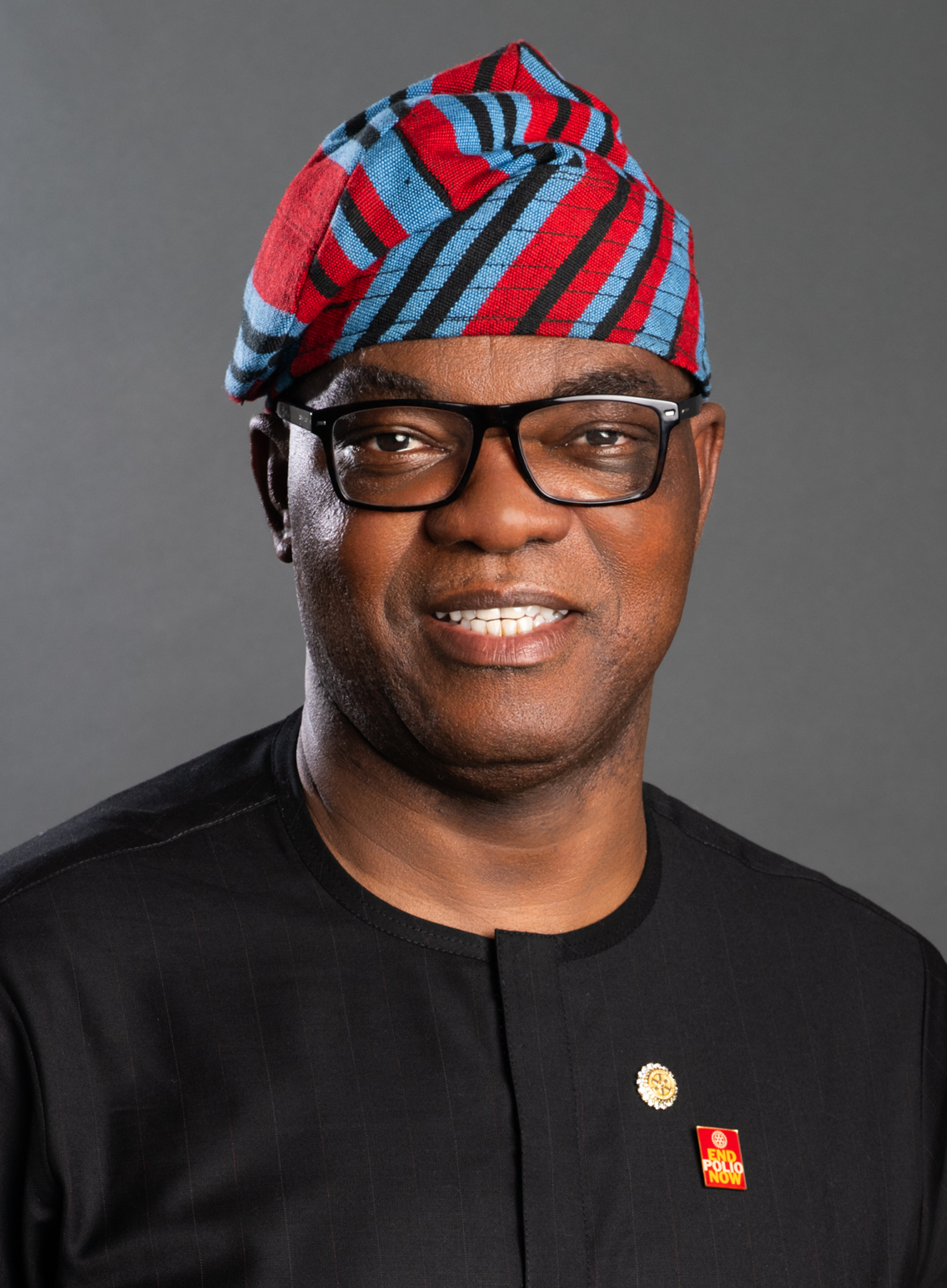
Olayinka Hakeem Babalola holds a degree in engineering and spent more than 30 years in the oil and gas sector, including senior leadership roles at Shell PLC. He founded Riviera Technical Services Ltd., an oil and gas infrastructure delivery firm, as well as Lead and Change Consulting, an executive coaching and organizational performance consultancy.
Babalola is a member of the Nigerian Society of Engineers, the Institute of Safety Professionals, and the Association of Change Management Practitioners. He also belongs to the Jericho Business Club, a civic organization in Ibadan that contributes to national policy dialogue.
Babalola became involved with Rotary in 1984 through Rotaract — Rotary’s program for young professionals and students — and joined the Rotary Club of Trans Amadi in 1994. He has since held a number of leadership roles within the organization and currently serves as a trustee of ShelterBox UK, Rotary’s official project partner for disaster relief.
He and his wife, Preba, support The Rotary Foundation through a named endowment and are members of the Arch Klumph Society, which recognizes Rotary’s highest level of philanthropic giving. His Rotary honors include the Africa Centennial Heroes Award, the Service Above Self Award, the Regional Service Award for a Polio-Free World, and The Rotary Foundation Citation for Meritorious Service.
Presidential Message Address January 12, 2026
Rotary International Assembly Orlando, FL, USA
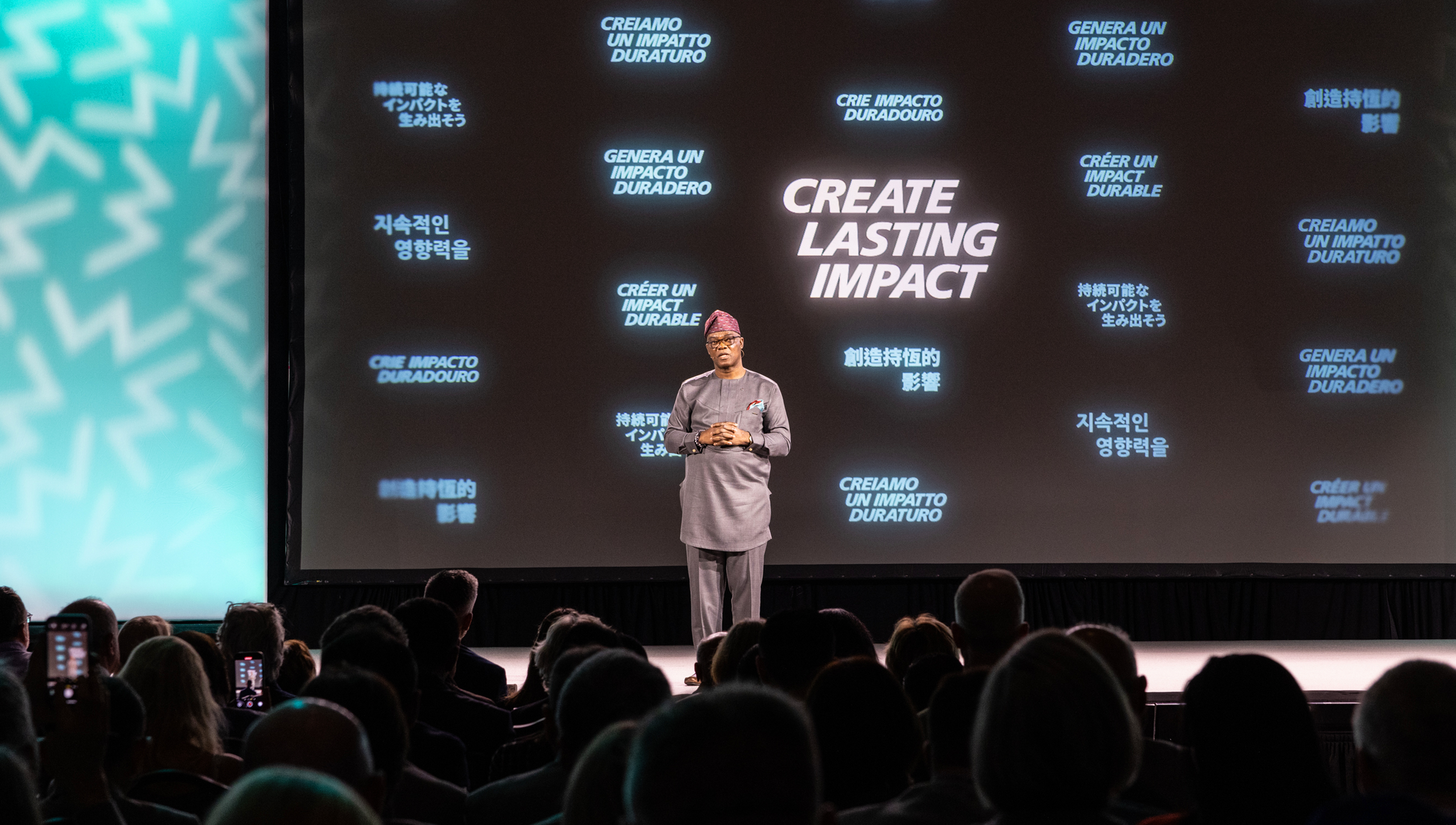
Good morning! My dear friends and family of Rotary, it is my honor to welcome you to the 2026 International Assembly and to congratulate all of you on becoming district governors-elect.
We have assembled Rotary senior leaders, staff, and exceptional members from around the world to help prepare you for the year ahead. And while we are all here together, I hope you take the opportunity to meet your fellow classmates. We do not enjoy the full benefits of our Rotary membership if we don’t experience its internationality. This week, the Rotary world is all around you.
Don’t let it pass you by. Get to know people. Make friends. You never know where a few kind words will get you.
Most Rotary members I meet — wherever they are from — are kind and happy people who make for fast and loyal friends.
Another quality we share is that Rotary has changed us. It has shaped who we are and made us better people. That is where change truly begins, not only for the people we serve, but also for ourselves.
Think about our vision statement: “Together, we see a world where people unite and take action to create lasting change — across the globe, in our communities, and in ourselves.”
We often talk about changing the world. We talk about ending polio, about building peace. We talk about changing our communities. There are plenty of incredible examples. But then I ask: How are we making lasting change in ourselves? Usually when I ask this question to Rotary members, the room grows quiet. That silence tells me something: that we do not think enough about how Rotary transforms us. How Rotary:
Transforms our careers

Transforms our businesses

Transforms our families
It can even be a light in the darkest of times, as it was for Tia Coppus, a member of the Rotary Club of Cary-Kildaire in North Carolina, USA. In 2021, Tia lost her husband to cancer after 19 months of fighting for his life. She had barely seen anyone in 19 months, between caring for her husband and isolating due to the COVID-19 pandemic.
That’s when a dear friend from Tia’s Rotary club called her and said, “You need to come next Thursday for dinner. We want to see you.” As she walked into that Rotary dinner, Tia was feeling nervous and vulnerable. But before she could even sit down, a new member she had never met wrapped her arms around her and said, “Welcome! We’re so glad you’re here.” It was in that moment that Tia realized that she was not alone, that she had a community. Rotary was her community.
After that dinner, Tia wrote how it impacted her. She said, and I quote: “Rotary has a way of showing up quietly, lovingly, when you need it most. It reminds you that even when you’re the one who’s used to giving, it’s okay to receive.”
And then she said, “So, if you are searching for connection, service, and a place to belong, Rotary might just be the answer.” And I think a few in this room can relate to this. My friends, as Rotary works to change the world, do not be afraid to share how Rotary has changed you.
I can tell you from my own life — Rotary has changed me profoundly. I started as a Rotaractor when I was still a teenager. I had a privileged upbringing, a good education in a place where many did not have that opportunity.
One of my club’s literacy projects opened my eyes. We were helping people in my community learn to read and write. I thought to myself that nobody my age in my country should grow up without those skills.
That project changed me, and with that change came the responsibility to expand access to education. This cause is especially important today. UNICEF estimates that about 6 million children worldwide could be forced out of school by the end of this year because of cuts to education funding. To address this education crisis, we need to change our mindset from one of donation to one of service. We have a great example to follow in Knysna, South Africa, where Rotary clubs are creating a lasting impact in education.
The Rotary Club of Knysna came together with local partners in 2019 to find out what it would take to ensure that all children in their community had access to quality early childhood education by 2025. The club involved people in the community, worked to understand the problem, and got to work.
The resulting project unlocked the power of women in underserved communities to open and manage early childhood education centers. Today, the project has reached thousands of children and families, and it will continue to provide education in those communities for generations.
We can re-create this kind of impact in other parts of the world, and in doing so, we can earn the trust and recognition of our neighbors in the communities we serve.
And when more communities trust Rotary, more people want to join. But we must let them in first.
That might sound obvious, but it is something we have struggled with for some time. You see, when I tried to join Rotary as a young Rotaractor, I faced resistance.
One day I just showed up at a club lunch meeting. As a matter of fact, I had been there before, but only at their invitation.
The president looked at me, a young Rotaractor, and said, “What are you doing here?” I told them I was there to join Rotary. Everyone in the room turned their heads to look at me. He said, “What audacity! You cannot just join. You need an invitation.”
I could have walked away. Instead, I said, “I didn’t know a child needed an invitation to enter his parents’ home.” As silence spread across the room, one Rotarian, Soji Fowode, spoke up. “Yinka, I will sponsor you.”
And that’s how I became a Rotarian.
But what if Soji had remained silent? I might never have become a member, and I might not be standing before you today.
Rotary has changed since then. But some clubs still hide behind closed doors instead of embracing the world with open arms.
Young people’s views are not always respected. People from different backgrounds or with different ideas are not always made to feel welcome. And when that happens, we lose potential members before they even get started.
And we need more members. The Board of Directors has set a goal of increasing membership to 1.25 million Rotarians and 125,000 Rotaractors by our 125th anniversary in 2030. Reaching that goal begins with all of us.
So, as we begin this International Assembly, I encourage you to think about how we welcome others. You never know whose Rotary story might begin — or end — based on the way you make them feel at a meeting or service project.
That’s how we’ll reach our goals. When you lead your district to reach its goals, together we will all reach ours. But whatever your goal, particularly with membership, I encourage you to do better than your best. Traditionally, we celebrate clubs that raise the most funds, attract the most members, or run the biggest projects.
This is important. The healthiest competition should not be between clubs, but between our past and present.I want to challenge each district and club to look back at the last five to seven years. What was your best year for membership growth? What was your best year for fundraising? What was your highest-impact project?
Once you find your best year, I challenge you to do better than your best. You will spend a year of your life as district governor. What do you want people to say when they look back at your year as a leader? You’ll be surprised how much they will remember.
If a club inducted 10 new members in its best year, it should aim for at least 11. If members raised $50,000 a few years earlier, see if they can raise $55,000 this year. Not to prove they’re better than anyone else, but to become the best version of themselves.
There’s a saying: Good, better, best. Never let it rest. Till the good gets better and the better gets best.That same thought applies just as much to ourselves as it applies to our clubs and districts. We need to create a change-and-impact mindset. It’s important to remember change and impact are not the same. Change is only the beginning. Impact is what endures.
Let me share an example from Nigeria, where Rotary’s program of scale, Together for Healthy Families, has been at work for years. In the early days of the program, I visited a health center in one of the pilot cities. I wanted to see for myself what was happening.
The chief medical officer didn’t know who I was — only that I was a member of Rotary. He welcomed me warmly.
He told me that they had started working with Rotary about 18 months earlier. Soon, infant and maternal deaths plummeted.
Before Rotary’s intervention, many women avoided prenatal care, which is essential to ensuring a safe birth for both mother and child. After working with Rotary, systems were put in place to help expectant mothers receive prenatal care.
The community was involved. Attendance went up. Mortality went down. And after I spoke with that doctor, I could see clearly how that project would transform lives across Nigeria for decades. That is what I mean when I say “lasting impact.”
As members of Rotary, we share a vision of a better future: a world free of polio, a world at peace, a world where everyone has access to a quality education. To make this vision a reality, we must acknowledge and unleash the change within ourselves. We must focus not only on outcomes but on impact. An outcome of Tia’s Rotary club inviting her to dinner was that she no longer felt alone. But the impact is the hope and sense of community that she and her fellow club members will carry with them for the rest of their lives.
In Nigeria, an outcome of Together for Healthy Families is lower infant and maternal mortality rates. But the impact is the children who will grow up with the love and guidance of their mothers, not only today, but for generations.
We will reach our 2030 membership goals. And when we do, an outcome will be more Rotary members around the world. And we know that, wherever Rotary goes, good things follow. And that impact will be a stronger, more effective Rotary and a better world for years to come.
My friends, that future begins with us. But it must endure long after our work with Rotary ends. And that is why the presidential message for 2026-27 is Create Lasting Impact. There are many ways to Create Lasting Impact. Across the globe, it means we must deliver on our promise to eradicate polio and leverage the full benefit of our Rotary Peace Centers.
In your clubs and districts, it means welcoming more people and doing our part to meet our 2030 membership goal.
And you can inspire the Rotary world to Create Lasting Impact in ourselves — by being curious, asking questions, and embracing the infinite opportunities available to our Rotary family.
Ask yourselves how you will inspire your clubs or your members to deliver results and create lasting impact in themselves.
Progress is not automatic. It begins with change within us.
My dear DGEs, success will not find you. You must seek it out.
When we change ourselves, we change our clubs and districts. When we change our districts, we change the communities we serve. And when we change our communities, we create lasting impact across the globe, in our communities, and in ourselves.
Thank you, my dear friends, and welcome to your International Assembly.